01
Process audit
Reviewed how clearance requests were recorded, searched, and prepared so the system could reduce repetitive lookup and document recreation work.
Case Study
A clearance document management system built for Hall of Justice workflows, combining secure access, searchable records, and a live clearance editor into one internal platform.
01 / Problem
Overview
Clearance processing slows down when records are scattered, document requests are handled manually, and staff have to recreate or verify the same information across multiple steps.
Target Users
Hall of Justice staff, records administrators, and personnel responsible for preparing, reviewing, and releasing clearance documents.
Real-World Issue
The system addresses the practical need to search existing files quickly, manage official records consistently, and generate formal clearance documents without relying on fragmented manual processes.
02 / Ownership
03 / Process
Reviewed how clearance requests were recorded, searched, and prepared so the system could reduce repetitive lookup and document recreation work.
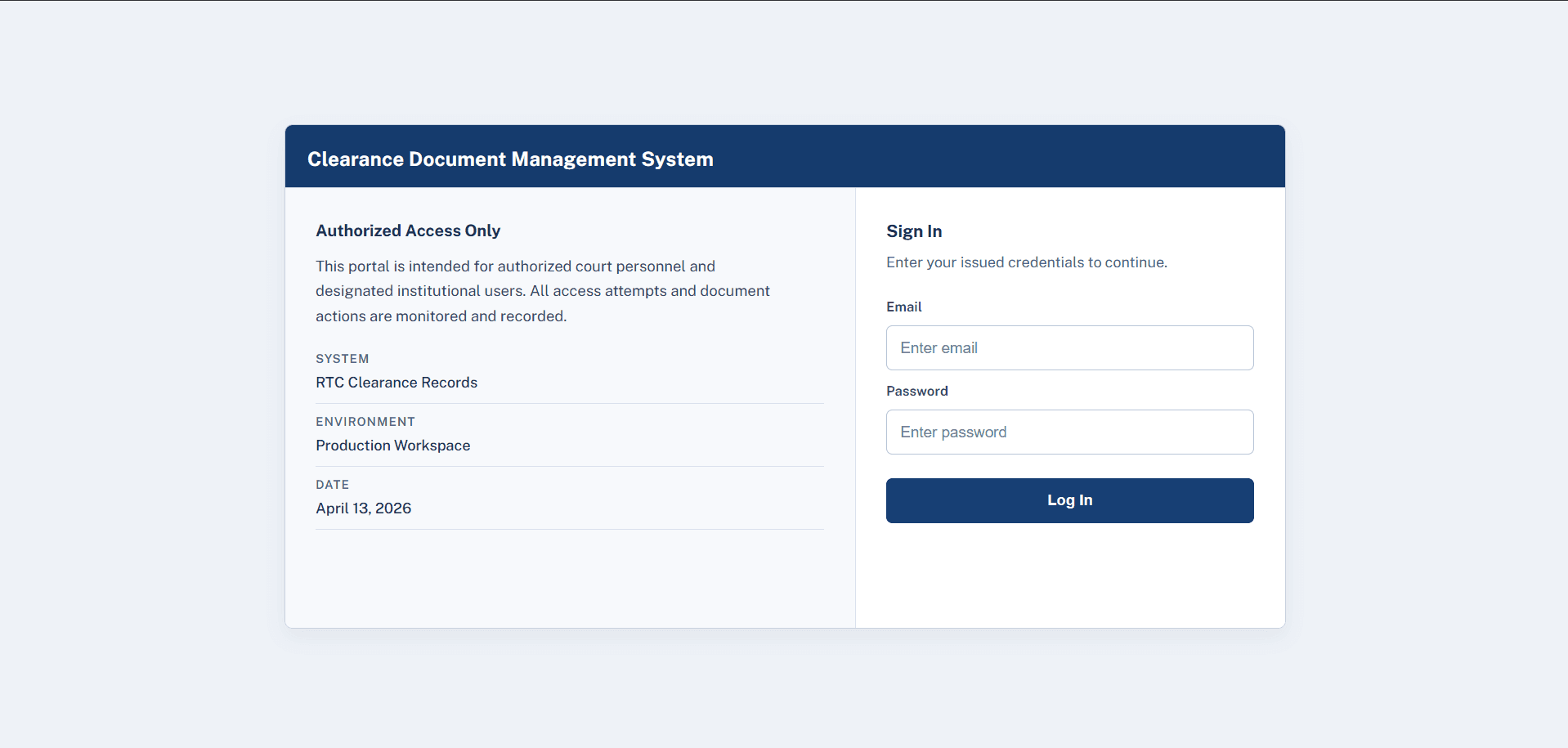
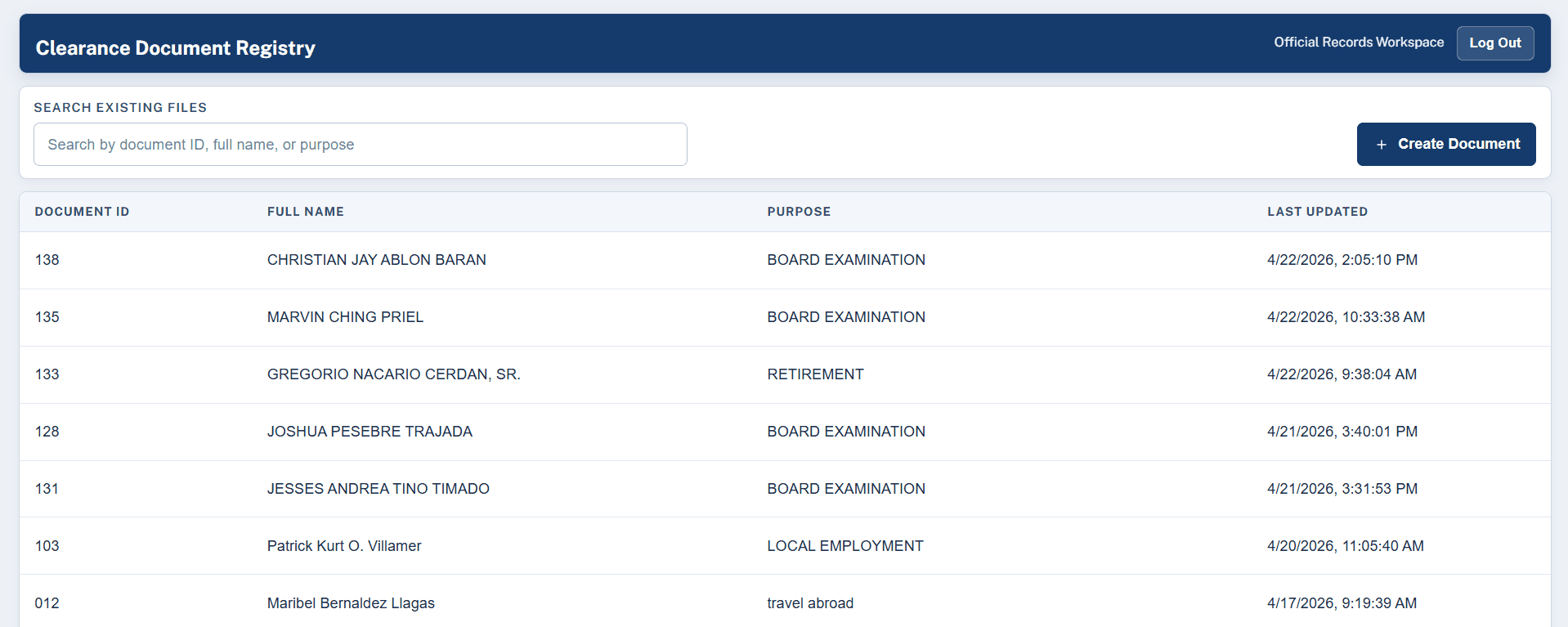
Structured the platform around document metadata, applicant information, document purpose, and update history so staff could retrieve and reuse records more efficiently.
Implemented a full workflow that included authenticated access, a searchable registry, a document editor, and export-ready clearance output using Next.js, Node.js, Express, and Supabase.
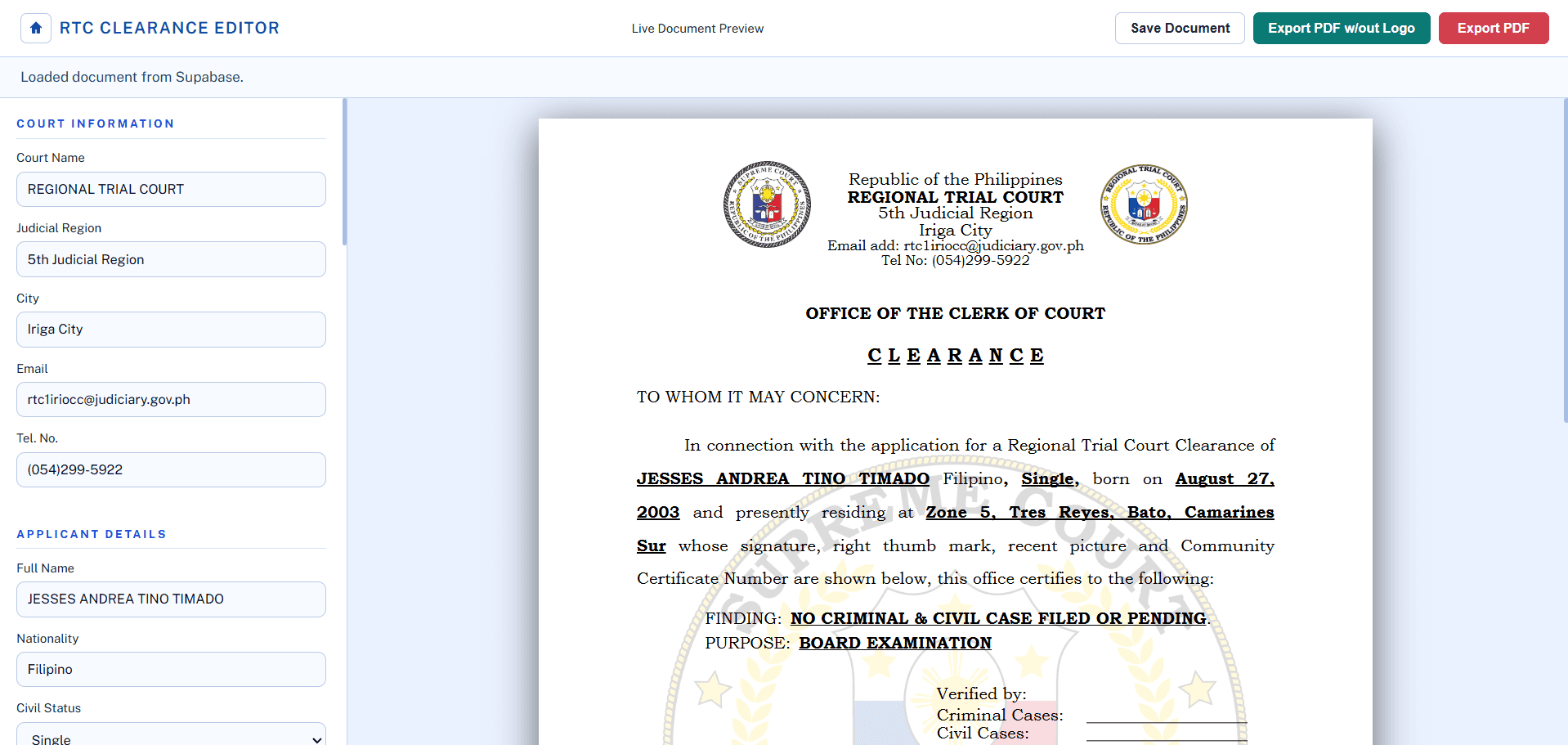
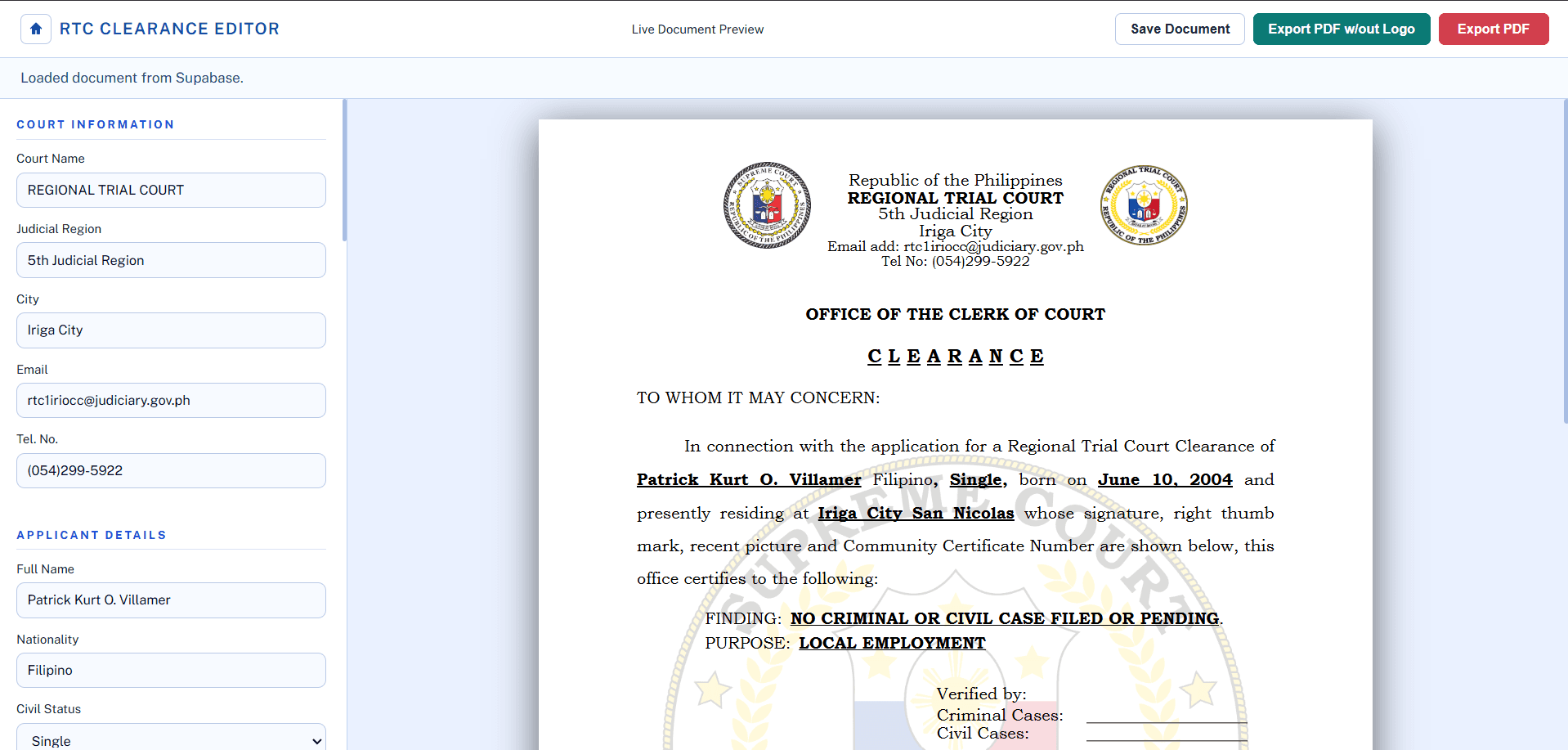
Refined the forms, preview layout, and export actions so the generated document remained readable, formal, and practical for actual internal use.
04 / Product
05 / Architecture
frontend
Next.js interface for authentication, registry search, document editing, and preview-driven document preparation.
backend
Node.js and Express API layer.
database
Supabase-backed persistence for clearance records, applicant details, and document data.
apis
Backend endpoints supporting authentication, document lookup, record updates, save actions, and export-related flows.
deployment
Web deployment configured for internal records access and browser-based document management.
integrations
The workflow connects stored registry data with an editor and export pipeline so users can move from retrieval to document generation in one system.
06 / Decisions
Challenge
Solution
The interface was organized around the actual sequence of work: log in, search or create a record, edit applicant and court information, then preview and export the final clearance document.
Challenge
Solution
The editor was designed with structured inputs on one side and a live document preview on the other, making it easier to validate information before saving or exporting.
Challenge
Solution
A registry view with searchable record fields and timestamped entries made it easier to locate existing files without manually browsing separate records.
07 / Impact
08 / Visuals
09 / Reflection
This project pushed me to think beyond CRUD screens and focus on the full lifecycle of an official document. It reinforced the importance of searchability, structured data entry, and preview-driven document generation when accuracy and turnaround time both matter.